
RESOURCES & INSIGHTS
Knowledge Center
Explore practical insights, operational strategies, leadership guidance, and industry resources created exclusively for plaintiff personal injury law firms.
Whether your firm is improving workflows, strengthening its team, or preparing for growth, the ULSS Knowledge Center provides practical information designed to help your operation become more efficient, consistent, and scalable.
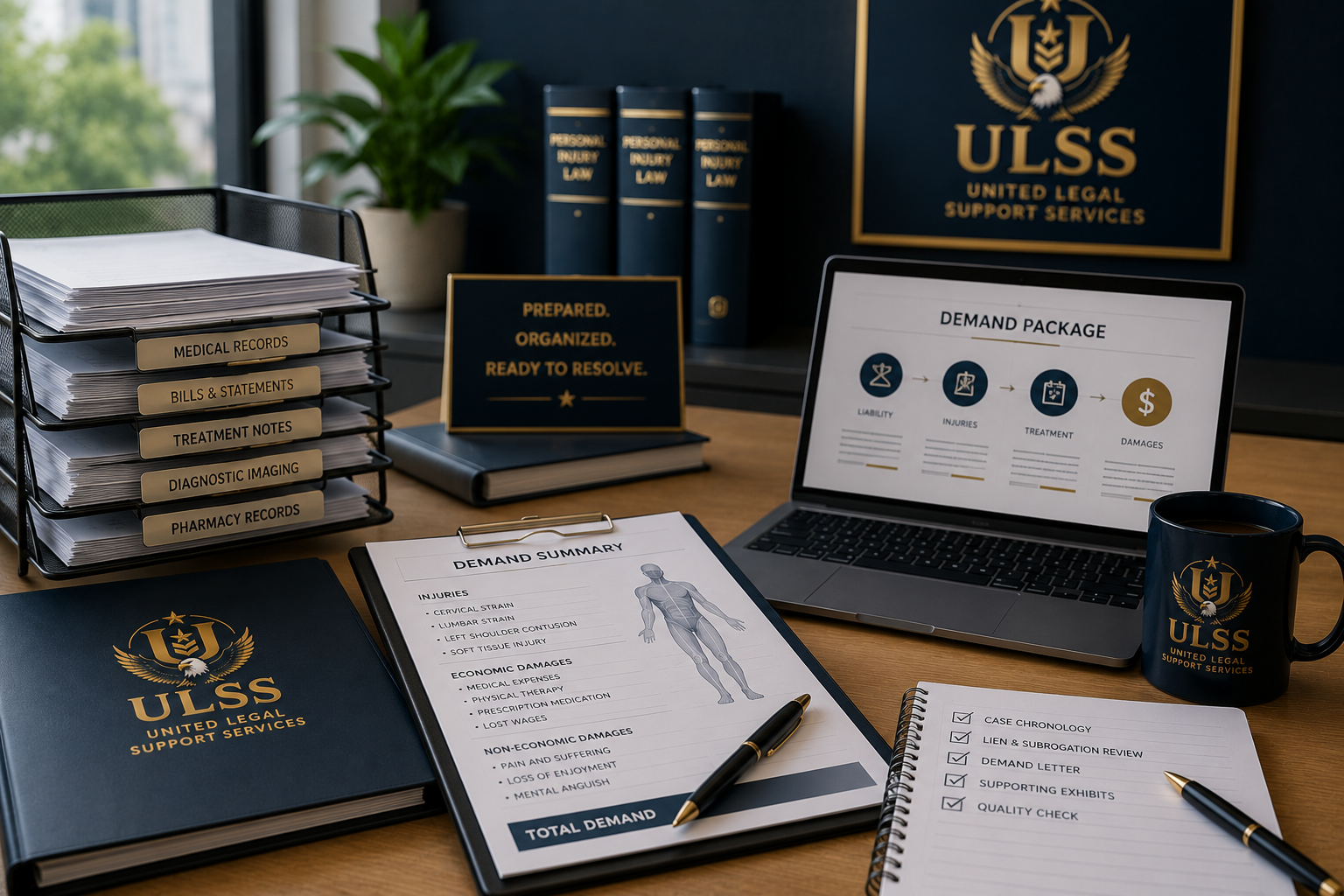
Demand Package Best Practices Every Firm Should Know
Demand Package Best Practices Every Plaintiff Personal Injury Law Firm Should Know
Building Organized, Persuasive, and Efficient Demand Packages That Support Better Case Outcomes
Category: Demand Preparation
Reading Time: 7 Minutes
Author: United Legal Support Services
A Well-Prepared Demand Package Tells the Client's Story
A demand package is more than a collection of medical records and bills—it's the opportunity to present a complete picture of how an injury has affected a client's life. A thoughtfully organized demand package helps insurance adjusters understand liability, medical treatment, damages, and the overall value of a claim.
When demand preparation lacks organization or consistency, important details can be overlooked, negotiations may be delayed, and attorneys often spend valuable time correcting avoidable issues.
A structured approach to demand preparation improves efficiency, strengthens case presentation, and allows attorneys to focus on legal strategy rather than administrative tasks.
1. Begin Preparing Long Before Treatment Ends
One of the most common mistakes is waiting until treatment concludes before organizing the file.
Successful firms begin building the demand package throughout the life of the case.
Medical records, billing statements, photographs, insurance correspondence, and investigative documents should be collected and organized as they become available.
Preparing continuously reduces last-minute scrambling and allows demand preparation to move forward quickly once treatment is complete.
Best Practices
Maintain organized digital case files.
Request records throughout treatment.
Track outstanding providers.
Verify medical billing balances regularly.
Update case summaries as new information is received.
Preparation should be an ongoing process—not a final task.
2. Organize Medical Records Chronologically
Medical records tell the story of recovery.
When records are presented chronologically, they allow the reviewer to understand the progression of treatment, the severity of injuries, and the client's healing process.
Disorganized records create confusion and make important information difficult to locate.
Include
Emergency treatment
EMS reports
Hospital records
Specialist records
Imaging reports
Physical therapy
Chiropractic care
Surgical records
Pain management
Final treatment notes
A chronological presentation creates clarity and credibility.
3. Verify Every Medical Bill
Accurate damages begin with accurate billing.
Before assembling a demand package, verify that every medical bill has been received and that balances are accurate.
Missing providers or duplicate billing can delay negotiations and create unnecessary follow-up.
Confirm
Provider names
Dates of service
Billing totals
Insurance payments
Outstanding balances
Liens or subrogation interests
Attention to detail during this stage prevents costly mistakes later.
4. Build a Clear Medical Summary
Insurance adjusters often review hundreds of claims.
A concise medical summary helps them quickly understand the client's injuries, treatment progression, and overall recovery.
Rather than forcing the reviewer to search through hundreds of pages of records, provide a structured overview that highlights the most important information.
Include
Mechanism of injury
Initial diagnosis
Treatment timeline
Major procedures
Ongoing complaints
Future treatment recommendations
Final prognosis
A well-written summary improves readability and strengthens the overall presentation.
5. Include Supporting Evidence
A strong demand package extends beyond medical documentation.
Supporting evidence provides additional context and reinforces liability and damages.
Supporting Documentation
Accident reports
Scene photographs
Vehicle damage photographs
Witness statements
Insurance declarations
Wage loss documentation
Property damage estimates
Correspondence
Expert opinions (when appropriate)
Every supporting document should reinforce the client's story.
6. Perform a Final Quality Control Review
Before a demand package is submitted, conduct a thorough quality review.
This final review helps identify missing documentation, formatting inconsistencies, or errors that could affect negotiations.
Final Checklist
✓ All medical records included
✓ All medical bills verified
✓ Supporting evidence attached
✓ Medical chronology completed
✓ Settlement demand reviewed
✓ Dates verified
✓ Names verified
✓ Attorney review completed
Consistency at this stage reflects professionalism and attention to detail.
7. Remember the Goal
The objective of every demand package is to present the client's case in a clear, organized, and persuasive manner.
An effective demand package should allow the reviewer to understand:
What happened
Why liability exists
The injuries sustained
The treatment received
The financial impact
The overall value of the claim
When information is organized logically and supported by complete documentation, attorneys are positioned to negotiate from a place of strength.
The Bottom Line
Demand preparation is one of the most important operational functions within a plaintiff personal injury practice.
Well-organized demand packages improve efficiency, reduce delays, strengthen negotiations, and demonstrate the professionalism of the firm representing the client.
By implementing standardized processes, maintaining organized documentation, and performing consistent quality reviews, law firms can create demand packages that support both operational excellence and better client outcomes.
About United Legal Support Services
United Legal Support Services partners exclusively with plaintiff personal injury law firms to provide attorney-supervised operational support nationwide. From client intake and medical records management to insurance claims administration, demand preparation, and operational consulting, our experienced professionals integrate seamlessly with your firm's existing workflows to improve efficiency, strengthen client service, and support sustainable growth.
Ready to Improve Your Demand Preparation Process?
Efficient demand preparation begins with strong operational systems.
If your firm is looking to streamline workflows, improve documentation, and build a more efficient pre-litigation operation, United Legal Support Services is ready to help.
Contact us today to learn how our attorney-supervised operational support can strengthen your firm's processes and position your team for long-term success.